


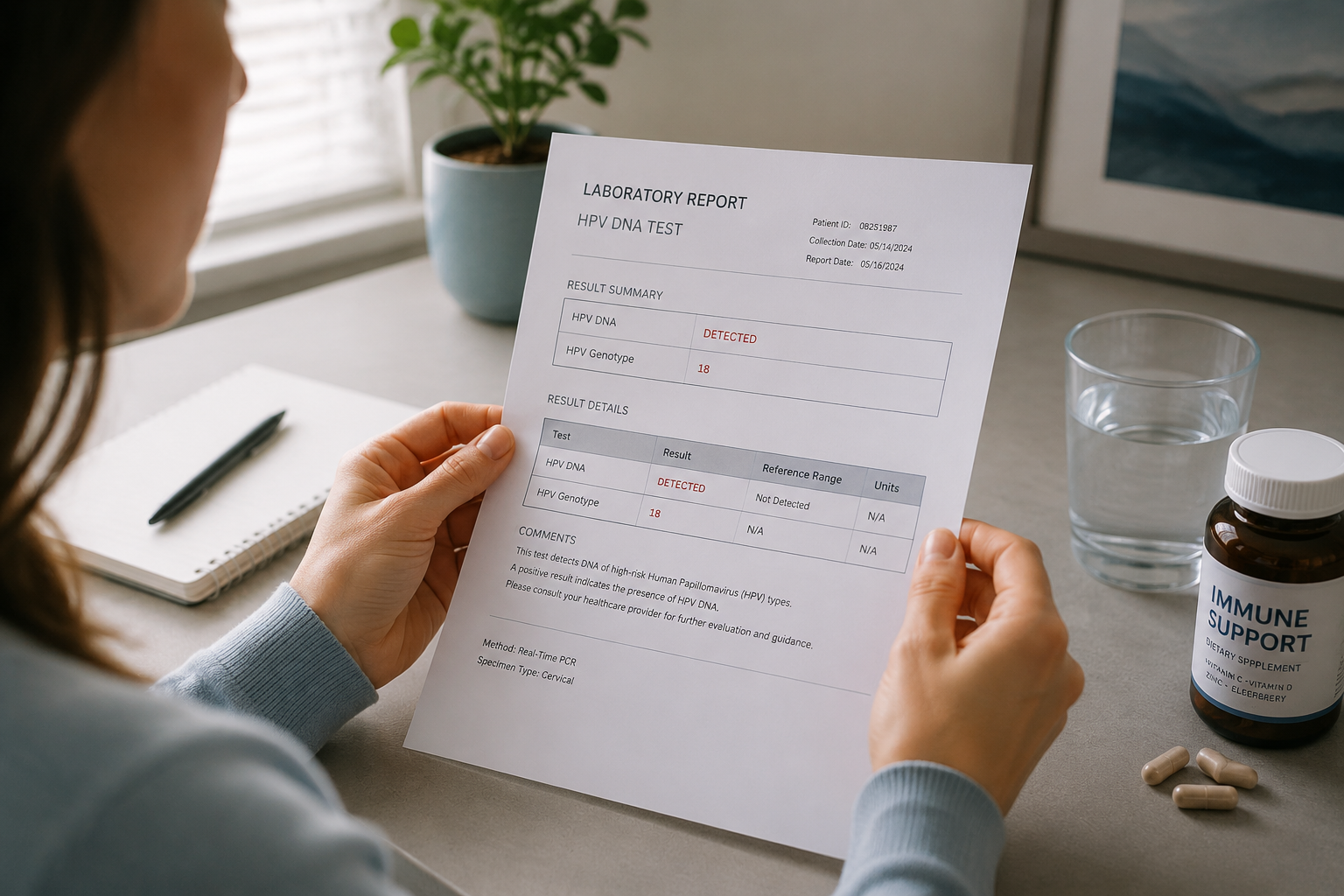
Months of consistent supplementation. Money spent. A protocol followed carefully. Then a positive HPV test result — again. That experience is genuinely frustrating, and it deserves a direct, honest explanation rather than vague reassurances or a push to simply buy more. Understanding why AHCC may not have worked requires looking at specific, identifiable factors — some of which are correctable and some of which are not. This article goes through each one clearly, including the hardest truth: for some people, AHCC does not produce a result regardless of how carefully the protocol is followed, and that is a real outcome the evidence supports.
Key Takeaways
- The only published Phase II randomized controlled trial on AHCC for HPV showed statistically significant clearance compared to placebo — but not all participants cleared the virus. AHCC is not a guaranteed treatment.
- The most common correctable reasons AHCC may not have worked include insufficient dose, insufficient duration, taking it with food, and active immune suppressors such as smoking, chronic stress, or vitamin D deficiency.
- The research protocol used 3 grams per day, taken fasted, for a minimum of 6 months — many people never reach this standard.
- Some patient characteristics — multiple HPV strains, long-standing infection — may reduce the likelihood of response and are not protocol failures.
- Genuine non-responders exist. If all modifiable factors have been addressed and HPV persists after 9 months, the appropriate next step is a conversation with a healthcare provider about monitoring and further evaluation.
In This Article
- First: AHCC does not work for everyone
- Reason 1 — Insufficient dose
- Reason 2 — Insufficient duration
- Reason 3 — Incorrect timing
- Reason 4 — Active immune suppressors
- Reason 5 — Multiple HPV strains
- Reason 6 — Long-standing infection
- Reason 7 — Product quality and standardization
- Reason 8 — Re-exposure
- When AHCC genuinely doesn't work
- What to do next
- Frequently asked questions
First: AHCC Does Not Work for Everyone
The most important thing to establish before analyzing any specific reason is this: AHCC does not work for everyone, and the published research supports that statement directly.
The foundational clinical evidence comes from a Phase II randomized placebo-controlled trial conducted by Dr. Judith Smith at the University of Texas Health Science Center at Houston. The trial found statistically significant HPV clearance in the AHCC group compared to placebo — a meaningful result. But not all participants in the AHCC group cleared the virus. The trial demonstrated a real immune-supporting effect in a proportion of participants, not a universal cure. For a fuller review of what that research actually shows, the evidence behind AHCC and HPV clearance is covered in detail separately.
AHCC has never been approved by the FDA as a treatment for HPV or any other condition. It is a dietary supplement with a specific and promising evidence base — but promising is not the same as guaranteed. The World Health Organization notes that most HPV infections clear through immune activity over time, and that process is variable across individuals. Some people's immune systems clear HPV readily; others do not, regardless of what supplementation they use.
Stating this clearly is not discouraging — it is the honest foundation for a useful conversation about what may be adjustable and what may not be.
Reason 1 — Insufficient Dose
The research protocol used 3 grams of AHCC per day. This is the dose at which statistically significant clearance was observed — and it is the only dose with published Phase II evidence for HPV.
Many people take one or two capsules of a 500 mg or 600 mg product daily. That amounts to 500 mg to 1.2 grams — well below the research dose. At 700 mg per capsule, reaching 3 grams requires approximately 4 to 5 capsules daily. This is not a minor discrepancy. Taking less than the research dose means the protocol being followed does not replicate the conditions under which clearance was observed in the trial.
This is one of the most common and most correctable reasons why AHCC may not have worked. For a complete breakdown of how to calculate and structure the daily dose correctly, the AHCC dosage guidance for HPV covers the clinical detail in full.
Reason 2 — Insufficient Duration
The published trial ran for six months before outcomes were assessed. HPV clearance is an immune-mediated process — it does not happen on a fixed schedule, and it cannot be rushed by higher doses or shorter timelines.
Many people test at two or three months, receive a positive result, and interpret that as evidence the protocol has failed. A positive test at three months does not mean AHCC is not working — it means the immune response has not yet reached the clearance threshold at that point in time. Some participants in the research required the full six months. Some practitioners working with persistent high-risk infections extend the protocol to nine or twelve months before drawing conclusions.
Stopping early based on a mid-protocol test is one of the most common reasons people conclude AHCC did not work when the protocol was never actually completed. For a clear explanation of the expected timeline and what to realistically expect at each stage, the AHCC timeline for HPV clearance provides specific guidance.
Reason 3 — Incorrect Timing
AHCC was taken in a fasted state in the published trial. This is not a minor detail — it is part of the protocol under which the evidence was generated.
Taking AHCC with food, particularly fat- or protein-rich meals, slows gastric emptying and may reduce absorption efficiency. Adding coffee or acidic beverages before dosing introduces further variables. If the supplement has been taken consistently with breakfast or alongside other supplements and meals, the absorption profile may differ meaningfully from the research conditions. This is one of the more straightforward protocol elements to correct. For the full explanation of why fasted dosing matters and how to implement it, why AHCC is taken on an empty stomach covers the pharmacological reasoning in detail.
Reason 4 — Active Immune Suppressors
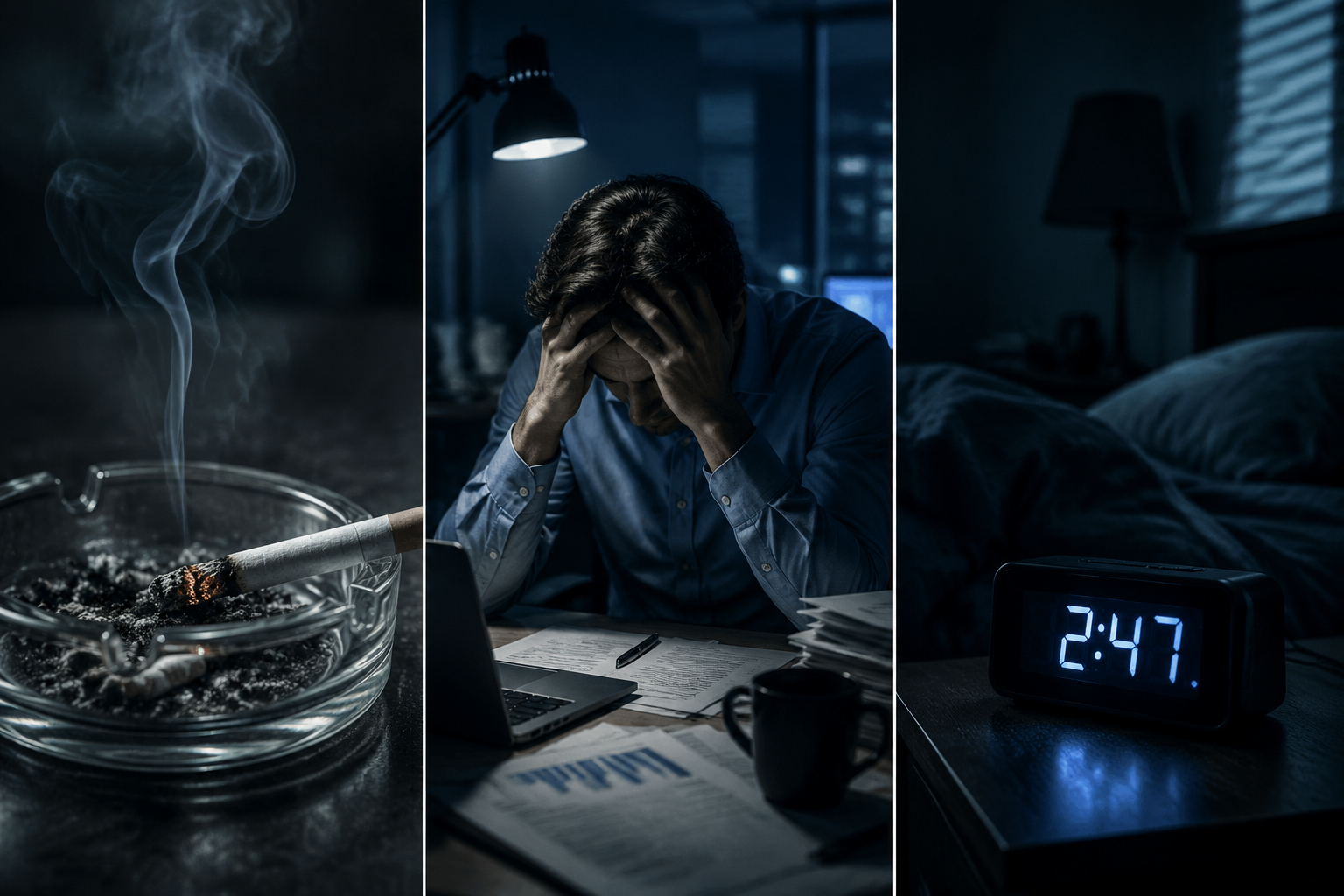
This is the most commonly overlooked factor in AHCC non-response. AHCC's proposed mechanism is immune modulation — it is thought to support the immune cells, including natural killer cells and dendritic cells, that identify and clear HPV-infected cells. If the immune system is being actively suppressed by other factors, the supplement has significantly less to work with.
The NIH notes that vitamin D plays a meaningful role in immune cell function, and deficiency is common and frequently undetected. Beyond vitamin D, several other factors carry meaningful evidence for immune suppression relevant to HPV clearance.
| Immune Suppressor | Evidence Level | Practical Action |
|---|---|---|
| Smoking | Strong | Cessation is the single highest-impact change available |
| Chronic psychological stress | Moderate-strong | Cortisol directly suppresses natural killer cell activity |
| Chronic sleep deprivation | Moderate | Reduces NK cell count and cytokine production |
| Vitamin D deficiency | Moderate | Test serum levels; supplement if deficient |
| HIV or immunosuppressive medication | Strong | Discuss with provider — response may be significantly limited |
| Heavy alcohol use | Moderate | Dose-dependent immune suppression |
If any of these factors are present and unaddressed, they may be substantially limiting the immune system's ability to respond — regardless of how carefully the AHCC protocol is followed. For a broader look at why some immune systems fail to clear HPV even with support, why HPV doesn't clear in some people examines the underlying mechanisms in detail.
Reason 5 — Multiple HPV Strains
Clinical observations suggest that people carrying multiple concurrent HPV strains may take longer to respond to immune support or may not respond as completely within a standard six-month window.
The reasoning is straightforward: the immune system is being asked to identify and mount a response against multiple distinct viral targets simultaneously. This is a patient characteristic — not a protocol failure — but it has real implications for setting realistic expectations. If a person knows they carry more than one HPV strain, a longer protocol timeline of nine to twelve months may be more appropriate to discuss with a healthcare provider before drawing conclusions about non-response. This should be framed as an observational pattern from clinical practice and preliminary research, not an established clinical predictor with a defined effect size.
Reason 6 — Long-Standing Infection
Persistent HPV that has been present for several years may be more deeply established at the cellular level than a recently acquired infection.
Some researchers hypothesize that longer-duration infections require more time for the immune response to build to a clearance threshold — that the immune system may need a longer period of support before it can mount an effective response. This is a research hypothesis based on observational patterns, not an established clinical finding. It is presented here as one possible contributing factor, not a definitive explanation. If a person has carried HPV for many years without clearance, this context is worth discussing with a provider when setting realistic expectations for any immune-support protocol.
Reason 7 — Product Quality and Standardization
Not all AHCC products are equivalent, and this distinction matters more than most people realize.
AHCC is a proprietary compound produced through a specific liquid culture fermentation process applied to shiitake mushroom mycelium. Its bioactive fraction consists of acetylated alpha-1,4 glucans — compounds that are structurally distinct from those found in standard mushroom extracts or generic shiitake supplements. A product labeled "mushroom extract" or "shiitake extract" is not AHCC. Within products that are correctly labeled as AHCC, alpha-glucan content and standardization still vary by manufacturer.
When evaluating a product, the key factors to verify are: the product is specifically labeled as AHCC (not a generic mushroom extract), it is manufactured in a GMP-certified facility, and the per-capsule dose is sufficient to reach 3 grams daily without requiring an impractical number of capsules. As a practical reference point, NovaHerbs AHCC provides 700 mg per capsule, is manufactured in a GMP-certified facility in the USA, and is specifically formulated to allow the research protocol dose to be reached with 4 to 5 capsules daily. If the product previously used did not meet these criteria, that is a meaningful variable worth correcting.
Reason 8 — Re-Exposure
HPV can be re-acquired. If HPV clears and a person continues sexual contact with an infected partner without barrier protection, re-infection is possible — and a subsequent positive test may be interpreted as AHCC failure when it is actually a new exposure.
This is a real consideration, but it requires accurate framing. According to the CDC, condoms reduce HPV transmission risk meaningfully — but they do not eliminate it entirely, because HPV spreads through skin-to-skin contact in areas not always covered by a condom. Consistent condom use is a reasonable protective measure and worth maintaining during and after any immune-support protocol. The appropriate guidance regarding partner testing and follow-up screening is a conversation to have with a healthcare provider, not a decision to make based on supplement labeling.
When AHCC Genuinely Doesn't Work
Some people take AHCC correctly — at the research dose, fasted, for the full six months or longer — with good protocol adherence, no obvious immune suppressors, and a verified product. They still do not clear HPV. This is a real outcome that the evidence supports, and it deserves to be stated plainly.
It does not mean AHCC is ineffective as a category. It means HPV clearance is an immune-mediated process with significant individual variation, that no supplement works for everyone, and that the immune complexity involved in clearing a persistent viral infection is not fully understood or controllable through supplementation alone. If this describes the situation accurately, the appropriate next steps are: continue regular cervical or HPV screening with a healthcare provider, address any remaining modifiable immune suppression factors, and discuss whether additional evaluation — such as colposcopy or closer monitoring intervals — is warranted given the duration of the infection.

What to Do Next
The table below provides a practical diagnostic framework. Work through each row honestly before drawing a conclusion about whether AHCC did not work or whether the protocol was not fully implemented.
| What to Check | Does This Apply? | Action |
|---|---|---|
| Daily dose below 3 grams | Yes | Correct dose to research protocol — approximately 4–5 capsules at 700 mg |
| Duration under 6 months | Yes | Continue the protocol; retest at the 6-month mark |
| Taking AHCC with food or coffee | Yes | Switch to fasted morning dosing, at least 30 minutes before eating |
| Active smoking | Yes | Cessation is the single most impactful immune change available |
| Vitamin D deficiency | Possibly | Test serum 25(OH)D levels; supplement if deficient |
| Chronic stress or poor sleep | Yes | Address directly — these are not minor variables |
| Multiple HPV strains | Yes | Extend protocol timeline; discuss with a provider |
| Non-AHCC product or underdosed capsules | Yes | Switch to a verified AHCC product at 700 mg or higher per capsule |
| All above addressed; still positive after 9 months | Yes | Discuss with provider; consider closer monitoring or further evaluation |
If several of these factors applied simultaneously during the first protocol attempt, a correctly implemented retry is a reasonable consideration. If all factors were already addressed and the result was still positive after nine months, the honest guidance is to focus on monitoring and provider-led evaluation rather than indefinite supplementation.
Frequently Asked Questions
How do I know if I took enough AHCC?
The research protocol used 3 grams per day. To determine whether the previous protocol reached this dose, multiply the per-capsule milligram amount by the number of capsules taken daily. If the total is below 3,000 mg, the research dose was not reached. At 700 mg per capsule, 4 capsules provides 2.8 grams and 5 capsules provides 3.5 grams — both within a clinically reasonable range. If the product used was 500 mg per capsule, reaching 3 grams would require 6 capsules daily, which many people do not take.
Should I try AHCC again if it didn't work the first time?
That depends on whether the first attempt actually followed the research protocol. If the dose was below 3 grams, duration was under 6 months, timing was inconsistent, or active immune suppressors were present and unaddressed, a corrected retry is a reasonable option. If the protocol was genuinely followed correctly and completely, the decision to retry should be made with a healthcare provider who can assess the full clinical picture, including the duration of infection and HPV strain type.
Can AHCC make HPV worse?
There is no evidence in the published literature that AHCC worsens HPV infection or accelerates disease progression. AHCC is generally well-tolerated, with the most commonly reported side effects being mild gastrointestinal symptoms. However, any supplement decision should be discussed with a healthcare provider, particularly for people who are immunocompromised or taking medications that affect immune function.
Is it possible my HPV test result was a false positive?
HPV tests are highly sensitive, and false positives are uncommon with standard PCR-based testing. However, laboratory error, sample handling issues, or testing immediately after a previous infection clears can occasionally produce unexpected results. If there is genuine uncertainty about a result, a repeat test conducted by a different laboratory or at a different time point is worth discussing with a healthcare provider.
How long should I wait before concluding AHCC isn't working?
Six months is the minimum timeframe based on the published trial protocol. For people with multiple HPV strains, high-risk strain types, or long-standing infections, some practitioners extend evaluation to nine or twelve months. Drawing a conclusion at two or three months is premature. A positive test at that stage reflects the normal timeline of immune-mediated clearance, not a definitive treatment failure.
Conclusion
Why AHCC may not have worked is a question with multiple specific, honest answers — and most of them are more useful than a simple verdict of success or failure.
Concrete next steps:
- Audit the previous protocol against the research standard: 3 grams per day, taken fasted, for a minimum of 6 months, using a verified AHCC product with adequate per-capsule dosing.
- Identify and address any active immune suppressors — smoking, vitamin D deficiency, chronic sleep deprivation, and unmanaged stress all have meaningful evidence for reducing immune clearance capacity.
- If the protocol was not correctly implemented, consider a properly structured retry with all variables corrected before drawing a final conclusion.
- Schedule follow-up screening with a healthcare provider regardless of supplement use — regular monitoring is the most important protective step for anyone with a persistent HPV infection.
- If all modifiable factors have been addressed and HPV has not cleared after nine months of correct protocol adherence, shift focus to provider-led monitoring and evaluation rather than extending supplementation indefinitely.
Some people will clear HPV with AHCC. Some will not. Both outcomes are real, and both deserve an honest response.
Related Reading
- For a complete review of the clinical evidence behind AHCC for HPV, including what the published trial actually found: Does AHCC really help clear HPV?
- For detailed guidance on calculating and structuring the correct daily dose: AHCC dosage for HPV — what clinical studies reveal
- For a broader look at why some immune systems struggle to clear HPV regardless of supplementation: Why HPV doesn't clear in some people
- For those who have cleared HPV and are considering whether to continue supplementation: After clearing HPV — should you keep taking AHCC?
References
- Smith JA et al. AHCC supplementation to support immune function to clear persistent HPV infections. Available at: PubMed
- Centers for Disease Control and Prevention. HPV fact sheet. Available at: https://www.cdc.gov/hpv
- National Institutes of Health Office of Dietary Supplements. Vitamin D and immune function. Available at: https://ods.od.nih.gov/factsheets/VitaminD-HealthProfessional/
- World Health Organization. Human papillomavirus (HPV) and cervical cancer fact sheet. Available at: https://www.who.int/news-room/fact-sheets/detail/human-papillomavirus-(hpv)-and-cervical-cancer
These statements have not been evaluated by the Food and Drug Administration. This product is not intended to diagnose, treat, cure, or prevent any disease. Consult your healthcare provider before beginning any new supplement regimen.
By Dr. Zafer Atli | Integrative Medicine & Women's Health


