


Roughly 4 in 10 women in the United States are not up to date with cervical cancer screening — and the most common reason is not indifference. It is the pelvic exam itself: the discomfort, the stirrups, the speculum, the anxiety, the time off work, and for many, the absence of a nearby provider. Self-sampling HPV tests now offer a medically validated alternative. The FDA approved self-collection for HPV testing in May 2024, and the option is expanding. What follows is a clear, clinical explanation of how these tests work, what is actually approved, and whether this approach is right for your situation.
Key Takeaways
- Self-sampling HPV tests allow you to collect your own vaginal sample using a swab — no speculum, no stirrups, no pelvic exam required.
- The FDA approved self-collection for HPV testing in healthcare settings in May 2024 (BD Onclarity HPV Assay). At-home self-collection is also now FDA-approved but has limited availability and still requires a provider to order the test.
- Research shows self-collected vaginal samples have accuracy comparable to clinician-collected cervical samples for HPV DNA detection specifically.
- A positive self-sampled HPV result still requires follow-up with a healthcare provider — self-collection is a screening entry point, not a replacement for clinical care.
- Clinician-collected cervical samples remain the preferred standard; self-sampling is a complementary option designed to reach people who would otherwise not be screened at all.
In This Article
- What is HPV self-sampling?
- How the test actually works
- FDA approval — what's currently approved
- How accurate is self-sampling vs clinician collection?
- Who is self-sampling right for?
- Who should still see a clinician?
- What happens if your result is positive?
- How to get a self-sampling test
- Supporting clearance after your results
- Frequently asked questions
Self-collection allows women to take their own HPV sample without a pelvic exam — a significant access improvement for many.
What Is HPV Self-Sampling?
HPV self-sampling — also called self-collection — is a method that allows a person to collect their own vaginal sample for HPV testing using a simple swab, without a speculum, stirrups, or a clinician performing a pelvic exam. The collected sample is sent to a laboratory for HPV DNA testing, which identifies whether high-risk HPV strains are present in the sample.
This is not a new concept globally. Australia introduced national self-sampling programs in 2017. The Netherlands, Denmark, Sweden, and the United Kingdom have all integrated self-collection into their cervical screening programs over the past decade. The United States has been slower to adopt the approach, but that changed meaningfully in 2024.
Understanding why screening matters is important context here. HPV is the most common sexually transmitted infection in the United States, with the CDC estimating that nearly all sexually active people will have HPV at some point in their lives. Most infections clear on their own, but persistent high-risk strains — particularly HPV 16 and 18 — can lead to cervical cell changes over time. For a deeper explanation of that progression, see how HPV causes cancer. Self-sampling exists specifically to reduce the barriers that prevent people from being screened in the first place.
How the Test Actually Works
The process is straightforward and takes only a few minutes. Here is what it involves, step by step:
- A healthcare provider orders the test and provides the FDA-approved collection kit. You cannot currently purchase this kit over the counter without a provider order.
- You insert a long, thin swab — similar in feel to a long cotton swab — into the vaginal canal. You do not need to locate your cervix. The swab samples the vaginal walls, not the cervix directly.
- Rotate the swab gently a few times to collect cells from the vaginal canal lining.
- Place the swab into the provided transport tube and seal it according to the kit instructions.
- The sample is sent to a certified laboratory for HPV DNA testing. The lab analyzes the sample for the presence of high-risk HPV strains.
- Results are returned to your provider, typically within one to two weeks.
The collection can be done in a private space at a healthcare facility — a clinic restroom, for example — or, if ordered for at-home use, in your own home. There is no speculum involved. No provider enters the room during collection. The process is genuinely private and, for most people, significantly more comfortable than a standard pelvic exam.
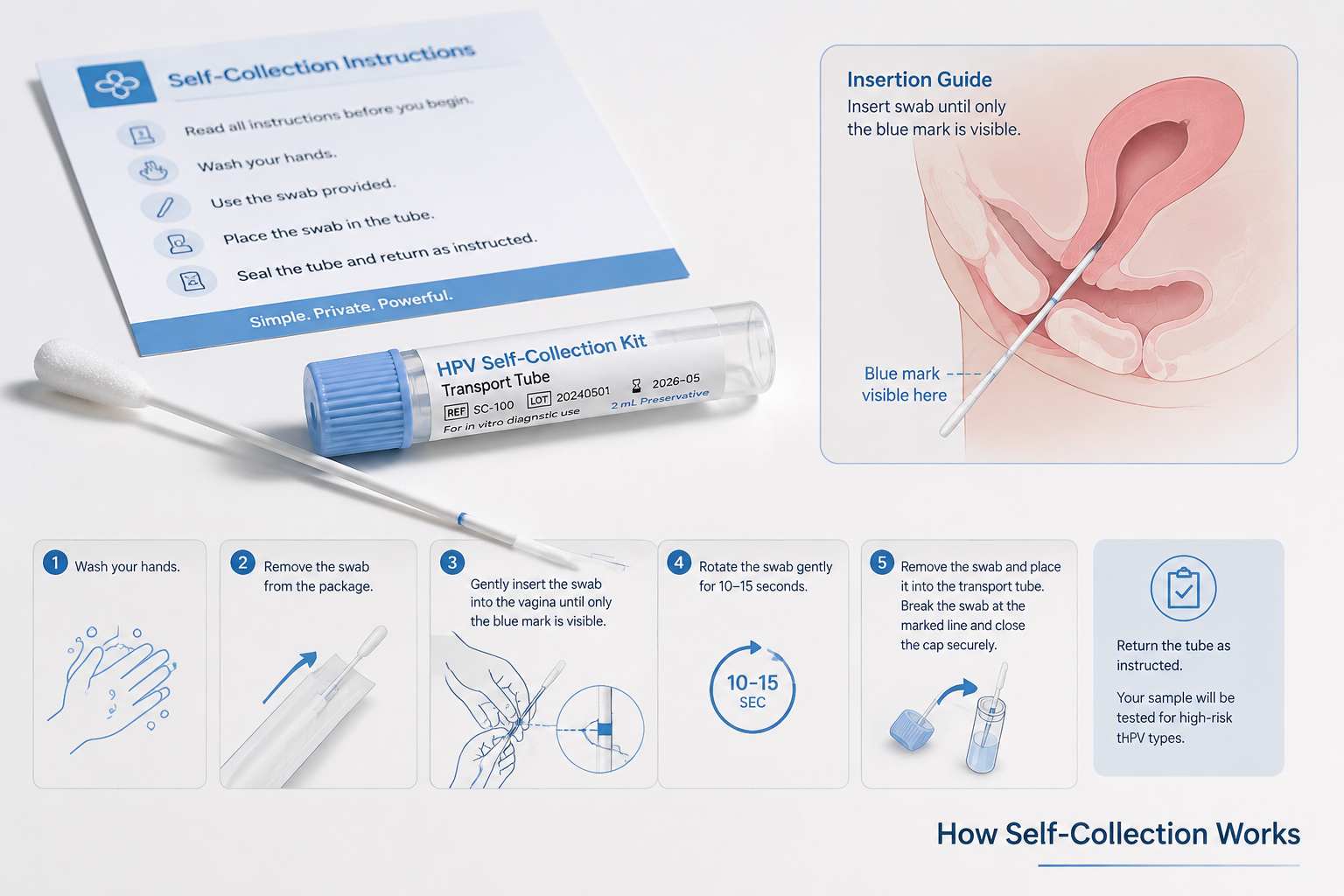
Self-collection uses a long swab inserted into the vaginal canal — the cervix does not need to be located.
FDA Approval — What's Currently Approved
The regulatory status of HPV self-collection in the United States has moved quickly, and it is worth being precise about what is and is not currently approved.
May 2024 — In-healthcare-setting approval
In May 2024, the FDA approved self-collection for HPV testing in healthcare settings. The BD Onclarity HPV Assay became the first and only FDA-approved HPV test with extended genotyping validated for self-collected vaginal samples. This means a person can collect their own sample in a private space within a clinic, pharmacy, or health facility — and that sample can be processed using an FDA-approved HPV test. The American Cancer Society has outlined this approval and its implications for cervical screening access.
At-home self-collection — approved but limited
At-home HPV self-collection is also now FDA-approved as a screening option. However, availability is currently limited. A healthcare provider must still order the test and provide the collection device. This is not the same as purchasing a test kit from a pharmacy shelf. The distinction matters: at-home collection is possible, but it requires provider involvement to initiate.
Clinician-collected samples remain the preferred standard
Both the American Cancer Society and FDA guidelines are clear that clinician-collected cervical samples remain the preferred option. Self-collection is a validated alternative designed to reach people who would otherwise not be screened — not a universal replacement.
| Regulatory Milestone | Year | Detail |
|---|---|---|
| WHO global self-sampling guidance | 2022 | Recommended for reaching 70% screening coverage by 2030 |
| FDA approval — healthcare settings | May 2024 | BD Onclarity HPV Assay; first FDA-approved test for self-collected samples |
| At-home self-collection | 2024–2026 | FDA-approved; limited availability; provider order required |
The NCI has launched a dedicated research network to study self-collection HPV testing at scale, which signals that broader availability is a near-term priority in the United States.
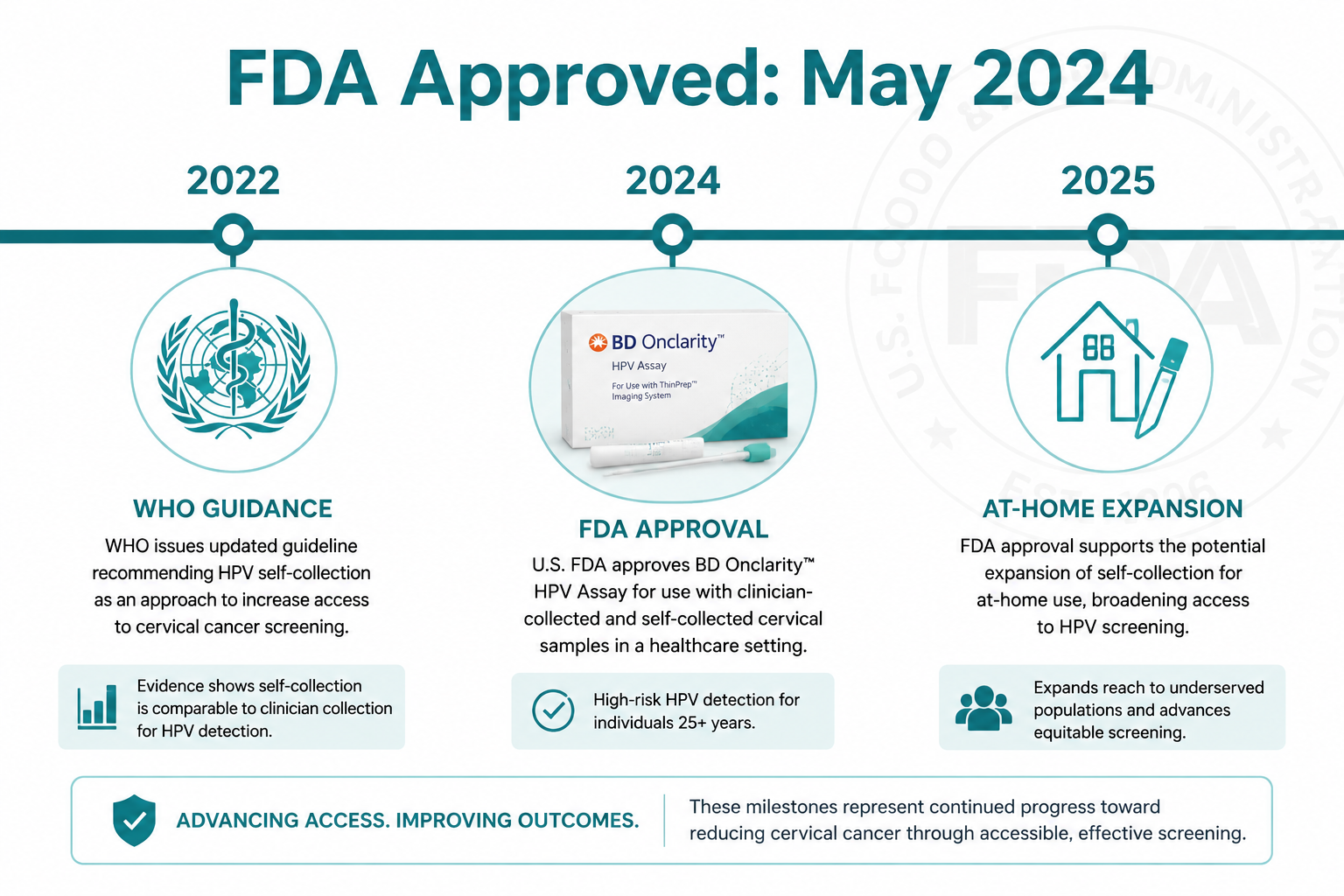
The FDA approved self-collection for HPV testing in healthcare settings in May 2024 — at-home testing followed with limited availability.
How Accurate Is Self-Sampling vs Clinician Collection?
Accuracy is the most important clinical question, and the evidence is reassuring with one important caveat.
A large meta-analysis by Arbyn and colleagues, published in the International Journal of Cancer in 2022, analyzed concordance between self-collected and clinician-collected samples across multiple studies. The findings showed high agreement between the two methods for HPV DNA detection specifically. For the purpose of identifying whether high-risk HPV is present, self-collected vaginal samples perform comparably to clinician-collected cervical samples.
The important caveat is anatomical. Self-collected samples are vaginal samples — they are collected from the vaginal canal, not the cervix. Clinician-collected samples are taken directly from the cervical transformation zone, which is the area where cell changes (dysplasia) most commonly develop. This means:
- For HPV DNA detection: self-collection performs comparably.
- For detecting cellular changes (cytology): clinician-collected cervical samples are more sensitive, because they sample the cervix directly.
This distinction explains why a positive self-sampled HPV result always requires follow-up clinical evaluation — the self-collected test tells you HPV is present, but it cannot assess whether cervical cell changes have already occurred.
| Clinician-Collected | Self-Collected | |
|---|---|---|
| Sample location | Cervix | Vaginal canal |
| HPV DNA accuracy | Reference standard | Comparable |
| Cell change detection | Full cytology possible | Limited |
| Speculum required | Yes | No |
| Provider required for collection | Yes | No |
| Privacy during collection | Low | High |
Who Is Self-Sampling Right For?
Self-sampling HPV tests are particularly well-suited for specific groups of people. The WHO's 2022 self-sampling guidance specifically highlights self-collection as a key tool for reaching the global target of 70% cervical screening coverage by 2030 — a target that cannot be met without addressing access barriers.
Self-sampling is a strong option for:
- People who avoid routine Pap smears due to physical discomfort, anxiety, or a history of trauma for whom pelvic exams are particularly difficult
- People with limited access to gynecological care — those in rural or underserved areas, uninsured individuals, or those without a regular provider
- People who are significantly overdue for screening and need a lower-barrier entry point to re-engage with their health
- People who are actively monitoring a known HPV infection and want more frequent testing than annual clinic visits allow
- People who understand their HPV status but find the clinical exam process a persistent deterrent
Potential drawbacks to consider:
- Does not provide cytology (cell change assessment) — a positive result still requires a clinical visit
- Requires a provider order — not a true over-the-counter option yet
- Availability varies significantly by location and healthcare system
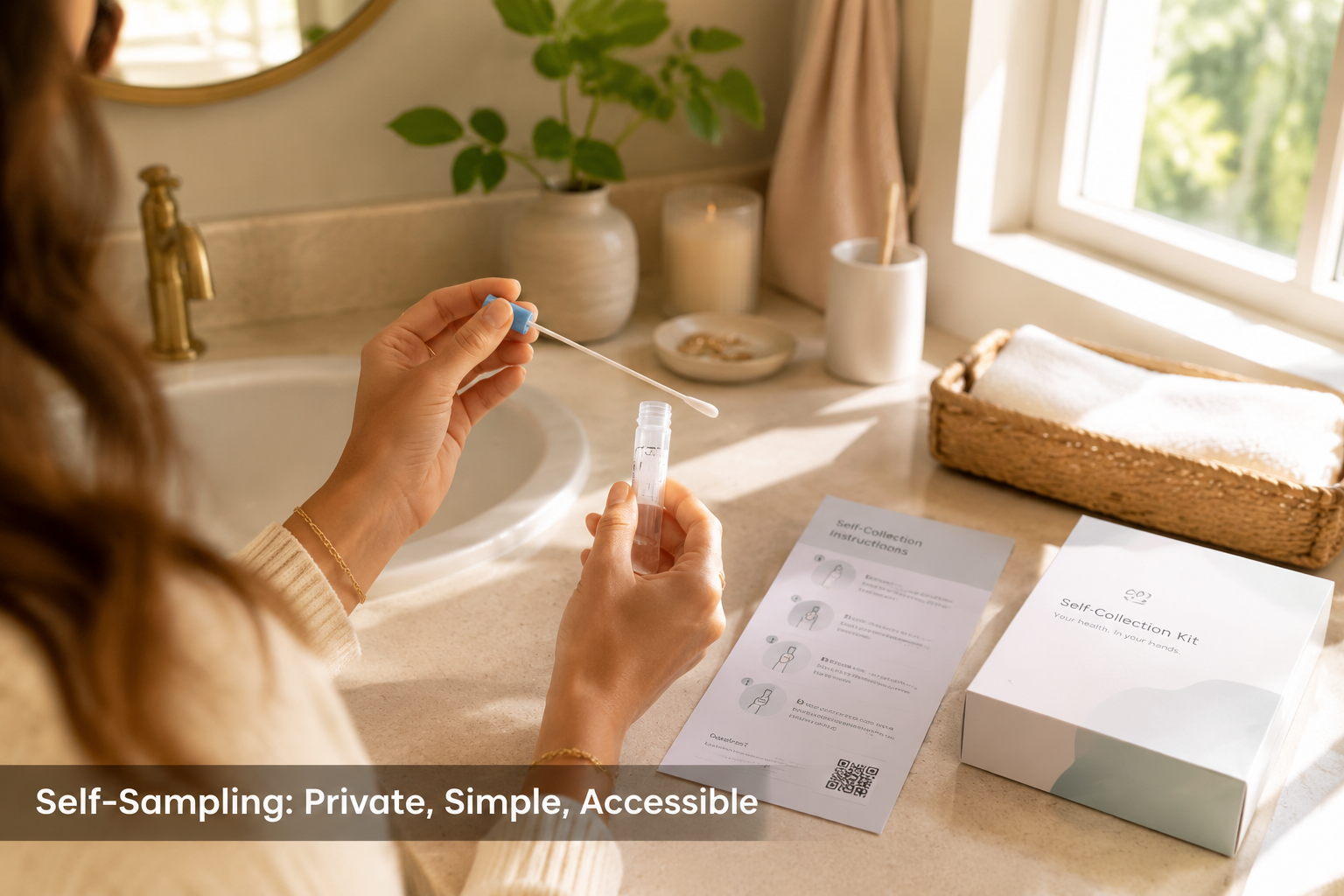
Self-sampling is particularly valuable for people who face barriers to routine pelvic exams — comfort, access, or prior trauma.
Who Should Still See a Clinician?
Self-sampling is not appropriate in every situation. There are clear clinical circumstances where an in-person evaluation is necessary and should not be replaced by self-collection.
Do not use self-sampling as a substitute for clinical care if:
- You have current symptoms — abnormal vaginal bleeding, unusual discharge, pelvic pain, or post-coital bleeding. These symptoms require direct clinical evaluation regardless of HPV status.
- You have a previous abnormal result (CIN 2 or higher) and are currently under surveillance. Clinical follow-up with colposcopy or cervical sampling is required in these cases.
- You need a full Pap smear with cytology — self-collected vaginal samples do not replace cervical cytology. If your provider has ordered a combined HPV and cytology co-test, that must be clinician-collected.
- You have never had a Pap smear — an initial baseline clinical examination is still recommended before relying on self-collection for ongoing monitoring.
- You are immunocompromised or have other conditions that place you in a higher-risk category — more intensive surveillance protocols apply.
Clinician collection remains the gold standard. Self-sampling is a complementary pathway designed to bring more people into screening, not to reduce the quality of care for those who can access it.
What Happens If Your Result Is Positive?
A positive HPV self-sampling result is not a diagnosis of cancer or even of cell changes. It means that high-risk HPV DNA was detected in your vaginal sample. What happens next depends on which HPV strain was identified and your clinical history, but the pathway is consistent: contact your healthcare provider promptly.
A positive result will typically lead to one or more of the following:
- Pap smear (cervical cytology) — to assess whether cell changes are present on the cervix
- Colposcopy — a closer examination of the cervix if cytology results are abnormal
- Extended genotyping — the BD Onclarity assay used in FDA-approved self-collection identifies specific HPV strains, which helps guide clinical decision-making
Self-sampling identifies HPV presence — it does not assess the extent of any cellular changes that may have occurred. It is a screening entry point, not an endpoint. For context on interpreting a positive HPV result alongside a normal Pap, see HPV positive but normal Pap — what it means.
Do not delay follow-up on a positive result. The purpose of early detection is to intervene before cell changes progress.
How to Get a Self-Sampling Test
Access to HPV self-collection in the United States is currently in an active expansion phase. Here is the practical picture as of 2026:
- Ask your healthcare provider directly — many clinics, OB-GYN offices, and community health centers are now offering self-collection as an option. Ask specifically whether they offer FDA-approved HPV self-collection.
- For at-home collection — ask your provider to order a self-collection kit. They provide the FDA-approved collection device, which you use at home and return by mail to a certified lab.
- Pharmacy-based collection — some pharmacy clinic networks are beginning to offer self-collection on-site. Availability varies by location.
- Telehealth providers — some telehealth platforms can order HPV self-collection kits for at-home use. This is one of the faster-expanding access pathways.
- Not yet available over the counter — as of 2026, you cannot walk into a pharmacy and purchase an FDA-approved HPV self-collection kit without a provider order. This may change within the next one to two years as the regulatory and distribution landscape continues to evolve.
Internationally: Australia, the Netherlands, the United Kingdom, Denmark, and Sweden all have established national self-sampling programs with different eligibility criteria and access pathways. If you are outside the United States, check your national cervical screening program guidelines for current self-sampling availability.
Supporting Clearance After Your Results
Whether your result is positive or negative, the same fundamental truth applies: the immune system is the only mechanism the body uses to clear HPV. There is no antiviral medication approved to treat HPV directly. Screening tells you where you stand — what happens next depends largely on immune function.
Several evidence-based lifestyle factors support immune health during HPV monitoring: smoking cessation (smoking is a well-established cofactor in HPV persistence and cervical cancer progression), adequate vitamin D levels, consistent sleep, and stress management. Understanding why HPV does not clear in some people can help you identify modifiable factors in your own situation.
On immune support supplements: AHCC (Active Hexose Correlated Compound) is the only supplement with a published, placebo-controlled human clinical trial specifically targeting HPV clearance. The research was conducted by Dr. Judith Smith at the University of Texas Health Science Center at Houston. The protocol used in that trial was 3 grams per day taken on an empty stomach for a minimum of six months. At 700 mg per capsule, NovaHerbs AHCC provides this dose in approximately four to five capsules per day, manufactured in a GMP-certified facility in the United States. The research is promising and preliminary — it does not constitute a cure, and AHCC should be used as part of a broader immune support strategy, not as a standalone treatment.
For a detailed review of the clinical evidence, see does AHCC really help clear HPV. For a broader framework on supporting the body's natural clearance process, how to clear HPV naturally covers the evidence-based lifestyle and supplement strategies in full.

NovaHerbs AHCC provides 700 mg per capsule, made in the USA in a GMP-certified facility.
Frequently Asked Questions
Is HPV self-sampling as accurate as a Pap smear?
These are two different tests measuring different things, so the comparison requires some nuance. For HPV DNA detection — identifying whether high-risk HPV is present — self-collected vaginal samples have been shown to perform comparably to clinician-collected cervical samples, based on the Arbyn et al. meta-analysis. However, a Pap smear involves direct cervical sampling and cytology, which assesses whether cell changes are present. Self-collected samples cannot replicate that. Self-sampling and Pap smears serve complementary but distinct purposes.
Can I do HPV self-sampling at home?
At-home HPV self-collection is FDA-approved, but it is not yet widely available and is not an over-the-counter purchase. A healthcare provider must order the test and provide the FDA-approved collection kit. Once you have the kit, collection can be done at home, and the sample is returned by mail to a certified laboratory. Availability is expanding through telehealth platforms and some provider networks, but it is not yet universally accessible across the United States.
Do I still need a Pap smear if my self-sampled HPV test is negative?
A negative HPV self-sampling result is reassuring, but it does not fully replace routine cervical screening in all circumstances. Current guidelines recommend that women with a negative HPV result can typically extend their screening interval — but the appropriate interval and follow-up plan depends on your age, screening history, and clinical risk factors. Discuss your specific situation with your provider. Cervical cytology (Pap smear) provides information that HPV DNA testing alone does not.
How often should I do HPV self-sampling?
Screening frequency recommendations depend on age and test type. Current American Cancer Society guidelines recommend HPV testing every five years for women aged 25 to 65, either alone or as a co-test with cytology. If self-collection is being used for monitoring a known HPV infection rather than routine screening, your provider may recommend a different interval based on your clinical situation. Do not self-determine your testing frequency — this is a clinical decision that should involve your provider.
What do I do if my self-sampled HPV test is positive?
Contact your healthcare provider promptly. A positive result means high-risk HPV was detected in your sample — it does not mean you have cancer or even cell changes, but it does mean follow-up evaluation is needed. Your provider will likely recommend a Pap smear, colposcopy, or both, depending on which HPV strain was identified and your history. Do not wait on this. Early detection and follow-up are the entire point of screening.
Conclusion
Self-sampling HPV tests represent a meaningful advancement in cervical cancer prevention — not because they are superior to clinical care, but because they remove barriers that have kept millions of people from being screened at all. The FDA approval of self-collection in May 2024, the growing body of accuracy data, and the expanding availability of at-home options together make this a legitimate and clinically supported alternative for the right candidates.
Actionable next steps:
- Assess your screening status. If you are overdue for HPV testing or have been avoiding it due to discomfort or access barriers, self-sampling may be the right entry point. Start by having an honest conversation with your provider.
- Ask your provider about self-collection options. Specifically ask whether they offer FDA-approved HPV self-collection in their facility, or whether they can order an at-home kit. Many providers are not yet proactively offering this — you may need to ask.
- Do not skip follow-up on a positive result. A positive self-sampled HPV test is not the end of the process — it is the beginning of a clinical evaluation. Book that follow-up appointment.
- Support your immune system regardless of your result. Whether you are monitoring a known HPV infection or screening for the first time, immune health is central to clearance. Review the evidence on lifestyle factors and, if appropriate, discuss immune support options with your provider.
- Stay informed as availability expands. The self-collection landscape is changing rapidly. What is limited today is likely to be widely available within the next one to two years. Check back with your provider annually about updated options.
Related Reading
- HPV positive but normal Pap — what it means and what to do next
- Why HPV does not clear in some people — and what can be done about it
- Does AHCC really help clear HPV — a review of the clinical evidence
- How HPV causes cancer — the biological progression explained
References
- American Cancer Society. HPV self-collection for cervical cancer screening. https://www.cancer.org/cancer/risk-prevention/hpv/hpv-and-hpv-testing/self-collection.html
- World Health Organization. WHO guideline for screening and treatment of cervical pre-cancer lesions for cervical cancer prevention, third edition. 2021. https://www.who.int/publications/i/item/WHO-SRH-23.1
- Arbyn M, et al. Agreement of HPV assays to detect cervical precancer: a meta-analysis of individual participant data from randomised trials. International Journal of Cancer. 2022;151(2):308–312. PMID: 35179777.
- National Cancer Institute. NCI launches network to study self-collection for HPV testing to prevent cervical cancer. https://prevention.cancer.gov/news-and-events/blog/nci-launches-network-study-self-collection-hpv-testing-prevent-cervical-cancer
- Centers for Disease Control and Prevention. Human Papillomavirus (HPV). https://www.cdc.gov/hpv
- Smith JA, et al. AHCC supplementation to support immune function to clear persistent human papillomavirus infections. Frontiers in Oncology. 2022. https://pubmed.ncbi.nlm.nih.gov/
These statements have not been evaluated by the Food and Drug Administration. This product is not intended to diagnose, treat, cure, or prevent any disease. Consult your healthcare provider before beginning any new supplement regimen.


