


Nearly 80 million Americans are currently infected with HPV, and the majority of them leave their doctor's office with the same two words: "watch and wait." That advice is medically sound — but for many people, it raises an immediate and reasonable question: is there anything I can actually do while I wait? This article addresses that question directly, drawing on published research to explain what immune support for HPV looks like in practice, and why supporting immune function during the monitoring period is not in conflict with conventional care — it is complementary to it.
Key Takeaways
- "Watch and wait" is a legitimate, evidence-based clinical recommendation — approximately 90% of HPV infections clear naturally within two years.
- The immune system is the only mechanism that clears HPV; no antiviral drug eliminates the virus directly.
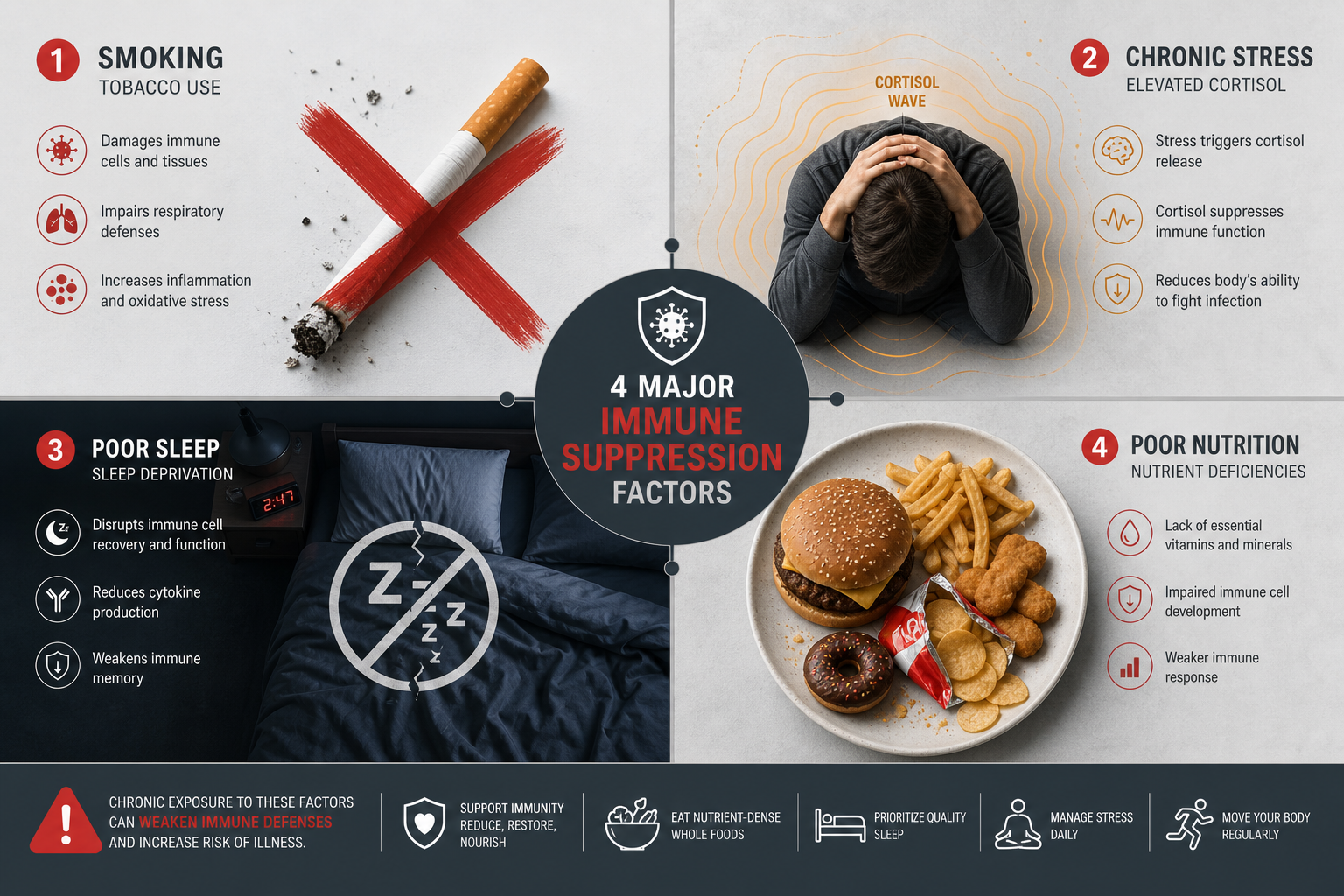
- Smoking, chronic stress, sleep deprivation, and nutritional deficiencies are the factors most consistently linked to HPV persistence in published research.
- AHCC is the only supplement with a published, placebo-controlled human trial specifically targeting HPV clearance — results are promising but preliminary.
- Immune support and conventional medical monitoring are complementary, not competing, approaches.
In This Article
- Why doctors say "watch and wait" — and why that's not the whole story
- The immune system is the only thing that clears HPV
- What suppresses immune clearance
- Smoking — the strongest modifiable risk factor
- Nutritional foundations for immune function
- Sleep and stress — the overlooked variables
- AHCC — the most evidence-based supplement option
- Combining conventional monitoring with immune support
- Frequently asked questions
"Watch and wait" is legitimate advice — but it doesn't mean there's nothing you can do in the meantime.
Why Doctors Say "Watch and Wait" — and Why That's Not the Whole Story
"Watch and wait" is not a dismissal — it is a clinically appropriate response to what the data actually shows. According to the CDC, approximately 90% of HPV infections clear on their own within two years. Prescribing treatments or interventions for a condition the body resolves without help would expose patients to unnecessary risk, cost, and side effects. The recommendation reflects good medical judgment, not indifference.
That said, "watch and wait" describes a monitoring strategy — it tells you when to come back for testing. It does not tell you what to do with your body in the meantime. The two are separate questions, and most clinical appointments simply do not have the time to address the second one in depth. That gap is where immune support for HPV becomes relevant.
The honest framing is this: if the immune system is what clears HPV, and certain behaviors are documented to impair immune function, then addressing those behaviors during the watch-and-wait period is a reasonable, evidence-informed choice. It does not contradict your doctor's guidance. It works alongside it.
The Immune System Is the Only Thing That Clears HPV
There is no antiviral medication that targets and eliminates HPV. No drug, no procedure, and no natural compound removes the virus on contact. The only mechanism that clears an HPV infection is the adaptive immune response — specifically, natural killer (NK) cells, cytotoxic T-cells, and dendritic cells working together to identify and suppress HPV-infected epithelial cells.
This is not a minor detail. It means that every evidence-based strategy for supporting HPV clearance works through exactly the same channel: optimizing the immune system's ability to do what it is already designed to do. The virus does not respond to direct attack — it responds to a well-functioning immune system that recognizes and eliminates infected cells over time.
Understanding why this process sometimes fails is equally important. For a deeper look at the cellular biology of how persistent HPV can progress, see how HPV causes cancer. For a detailed breakdown of why some immune systems struggle to clear the virus when others do not, why HPV doesn't clear in some people covers the specific persistence factors in depth.
What Suppresses Immune Clearance
The factors most consistently associated with HPV persistence in published research are not exotic or obscure — they are the same factors that suppress immune function broadly. Addressing them is not alternative medicine. It is removing documented barriers to normal immune performance.
| Factor | Evidence Strength | Notes |
|---|---|---|
| Smoking | Strong | Directly impairs local cervical immune surveillance |
| Chronic psychological stress | Moderate-Strong | Elevates cortisol; suppresses NK cell and T-cell activity |
| Sleep deprivation | Moderate | Reduces NK cell count and cytokine production |
| Vitamin D deficiency | Moderate | Impairs T-cell and NK cell function |
| Folate deficiency | Moderate | Associated with HPV persistence and cervical dysplasia |
| Heavy alcohol use | Moderate | Suppresses innate immune response dose-dependently |
| HIV / immunosuppression | Strong | Dramatically impairs HPV clearance; requires specialist management |
Each of these factors has an independent evidence base. None of them require a prescription to address. And several of them are among the most common features of modern adult life — which is precisely why they deserve attention.

The factors most associated with HPV persistence are the same ones that suppress immune function broadly.
Smoking — The Strongest Modifiable Risk Factor
Of all the lifestyle factors associated with HPV persistence, smoking carries the clearest and most consistent evidence. The effect operates through multiple pathways simultaneously: smoking impairs local immune surveillance in cervical tissue, introduces carcinogens that directly damage cervical epithelial cells, and reduces NK cell activity systemically. The result is a significantly elevated rate of both persistent HPV infection and cervical dysplasia among smokers compared to non-smokers across multiple large epidemiological studies.
This matters for immune support for HPV in a very direct way: no supplement, dietary change, or stress management practice has evidence comparable to smoking cessation in terms of its effect on HPV-related immune outcomes. If someone who smokes is asking what single change would most meaningfully support their immune system's ability to clear HPV, the answer from the published literature is unambiguous. Quitting smoking is not one option among many — it is the highest-priority modifiable factor on this list.
The WHO's HPV and cervical cancer fact sheet identifies smoking as a co-factor in cervical cancer progression, reinforcing why addressing it during the watch-and-wait period carries clinical significance beyond general health.
Nutritional Foundations for Immune Function
Nutrition does not cure HPV. But specific nutritional deficiencies are associated with impaired immune function and, in some research, with HPV persistence and cervical dysplasia. Correcting those deficiencies is a reasonable, low-risk step with a clear biological rationale.
The nutrients most directly relevant to antiviral immune function in the context of HPV include:
- Folate: Low folate levels have been associated with both HPV persistence and cervical dysplasia in published research. The NIH folate fact sheet confirms folate's role in DNA synthesis and repair — processes that matter significantly in HPV-infected epithelial tissue. Dietary sources include dark leafy greens, lentils, and fortified grains. Supplementation is appropriate when dietary intake is insufficient.
- Vitamin D: Deficiency is common in adults across all age groups, and NIH data on vitamin D and immune function shows that adequate vitamin D supports both T-cell activation and NK cell function. Testing serum 25(OH)D levels and correcting deficiency is a practical, evidence-informed step.
- Zinc: Required for T-cell development and NK cell activation. Dietary sources include pumpkin seeds, legumes, and animal proteins.
- Vitamin C: Supports white blood cell production and function; found in citrus, bell peppers, and strawberries.
For a comprehensive guide to dietary choices that support immune function in the context of HPV, see best and worst foods for HPV, which covers specific food choices, what to limit, and practical meal strategies in detail.
Vitamin D, folate, zinc, and vitamin C are the nutritional building blocks most directly relevant to antiviral immune function.
Sleep and Stress — The Overlooked Variables
Sleep and psychological stress are two of the most consistently overlooked factors in immune support for HPV — and two of the most consistently documented factors in impaired viral clearance across the broader immunology literature.
The mechanism for stress is well-established: chronic psychological stress elevates circulating cortisol, which suppresses both T-cell proliferation and NK cell activity. The immune cells most responsible for identifying and clearing HPV-infected cells are, in other words, among the first casualties of sustained stress. This is not a minor effect. Studies examining immune function in chronically stressed populations show measurable reductions in NK cell count and cytotoxic T-cell activity.
Sleep operates through a related but distinct pathway. During deep sleep, the body produces cytokines — signaling proteins that coordinate immune responses — and NK cell counts are partially replenished. Sleep deprivation reduces both. A single night of poor sleep produces measurable reductions in NK cell activity; chronic sleep restriction compounds this effect significantly.
Practical targets are straightforward: 7 to 9 hours of sleep per night on a consistent schedule, and a reliable daily practice for stress regulation — whether that is structured exercise, mindfulness-based approaches, or simply protecting time for adequate rest. These are not lifestyle luxuries. For someone trying to support their immune system's ability to clear HPV, they are foundational.
AHCC — The Most Evidence-Based Supplement Option
When it comes to immune support for HPV specifically — not immune support in general — one supplement stands apart from the rest in terms of published clinical evidence: AHCC (Active Hexose Correlated Compound).
AHCC is a standardized extract derived from shiitake mushroom mycelia. Its primary bioactive fraction is alpha-glucans, which are thought to interact with immune receptors involved in innate immune activation. The precise mechanism is still being studied — for a detailed look at how AHCC may interact with immune pathways relevant to HPV, see how AHCC clears HPV.
What makes AHCC distinct in the supplement landscape is that it is the only supplement with a published, placebo-controlled human clinical trial specifically designed to evaluate HPV clearance. The trial, conducted by Dr. Judith Smith at the University of Texas Health Science Center at Houston and published on PubMed, found statistically significant HPV clearance in the AHCC group compared to placebo at six months. A follow-up confirmatory trial has since been completed.
These results are promising. They are also preliminary. AHCC is not FDA-approved as a treatment for HPV, it does not guarantee clearance, and it does not replace medical monitoring. What it represents is the strongest supplement-specific evidence currently available for HPV immune support. For a full analysis of what the trial data shows and what it does not, see does AHCC really help clear HPV.
The protocol used in clinical research is 3 grams per day, taken on an empty stomach, for a minimum of six months. NovaHerbs AHCC provides 700 mg per capsule, manufactured in the USA in a GMP-certified facility, which translates to approximately four to five capsules per day at the research-validated dose. For guidance on dosing specifics, see what dosage of AHCC to take for HPV.

NovaHerbs AHCC provides 700 mg per capsule, made in the USA in a GMP-certified facility.
Combining Conventional Monitoring With Immune Support
The most important reframe in this entire article is also the simplest one: immune support and conventional medical monitoring are not competing approaches. They address different parts of the same problem.
Your doctor manages the surveillance side — Pap smears, HPV co-testing, colposcopy if indicated, and treatment of any cellular changes that require intervention. That monitoring is non-negotiable and cannot be replaced by any supplement, dietary change, or lifestyle practice. Immune support addresses a different question: what can be done to optimize the conditions under which the immune system operates during the monitoring period?
The table below summarizes how the two approaches divide responsibility:
| What Your Doctor Manages | What You Can Do Proactively |
|---|---|
| HPV testing and monitoring | Quit smoking |
| Pap smear and colposcopy | Optimize vitamin D and folate levels |
| CIN treatment if indicated | Prioritize 7–9 hours of sleep consistently |
| Medical follow-up schedule | Manage chronic psychological stress |
| Specialist referral if needed | Consider AHCC (3g/day, minimum 6 months) |
Neither column replaces the other. A person who takes AHCC, sleeps well, and quits smoking still needs their follow-up Pap smear. A person who attends every monitoring appointment but smokes, sleeps five hours a night, and is severely vitamin D deficient is not giving their immune system the conditions it needs to perform.
The goal is both columns, working together.
Frequently Asked Questions
Why don't doctors prescribe anything for HPV?
There is currently no antiviral medication approved to treat HPV infection directly. Doctors can treat the conditions HPV causes — such as genital warts or cervical dysplasia — but the virus itself has no approved pharmaceutical target. Because approximately 90% of infections clear naturally within two years, prescribing interventions for the infection itself would expose the majority of patients to unnecessary risk without benefit. The "watch and wait" approach reflects this reality accurately.
Is it safe to try immune support while doing watch and wait?
For most healthy adults, the lifestyle-based approaches covered in this article — improving sleep, managing stress, quitting smoking, and correcting nutritional deficiencies — carry minimal risk and broad health benefits beyond HPV. AHCC has been studied in human clinical trials and has a favorable safety profile in published research. That said, every individual's health situation is different. Discussing any new supplement with a healthcare provider before starting is always the appropriate step, particularly for anyone with existing health conditions or who takes prescription medications.
How long does it take to know if immune support is working?
HPV clearance is confirmed through repeat testing, typically at 12-month intervals in standard monitoring protocols. There is no symptom or feeling that confirms clearance — the only way to know is through a negative HPV test result. Clinical research on AHCC used a six-month minimum protocol, with testing at that point. Lifestyle changes such as smoking cessation and sleep improvement support immune function continuously, but their effect on HPV clearance specifically is not measurable outside of formal testing. Continued medical monitoring is the only reliable way to track progress.
Does AHCC interfere with any medications?
Published clinical trials on AHCC have not identified significant drug interactions in the populations studied. However, AHCC is an immune-modulating compound, and anyone taking immunosuppressant medications — such as those used after organ transplantation or for autoimmune conditions — should consult their prescribing physician before adding any immune-modulating supplement. This is a precautionary recommendation, not a documented contraindication, but it is an important one.
Should I tell my doctor I'm taking AHCC?
Yes, always. Transparency with your healthcare provider about all supplements, including AHCC, allows them to make fully informed decisions about your care. Most providers are receptive to discussing evidence-based supplements when approached with published research. Bringing a summary of the clinical trial data to the conversation can make that discussion more productive. Concealing supplement use from a provider is never in a patient's best interest.
Conclusion
Receiving an HPV diagnosis and being told to "watch and wait" is a disorienting experience — not because the advice is wrong, but because it leaves a question unanswered: what do I do in the meantime? The answer, based on published evidence, is that there is a meaningful amount that can be done — and none of it requires abandoning conventional care.
Next Steps:
- Continue all scheduled monitoring. Pap smears, HPV co-testing, and provider follow-up are non-negotiable. Immune support does not replace them.
- Address the highest-impact modifiable factor first. If you smoke, cessation is the single most evidence-supported step for HPV immune support. No supplement has comparable evidence.
- Test and correct nutritional deficiencies. Ask your provider to check serum vitamin D and folate levels. Correct deficiencies through diet and supplementation as appropriate.
- Protect sleep and manage stress consistently. Seven to nine hours of sleep per night and a reliable stress regulation practice are foundational immune support steps with no downside.
- Consider AHCC if you want supplement-level support. Review the clinical evidence, discuss it with your provider, and if you proceed, use the research-validated protocol: 3 grams per day on an empty stomach for a minimum of six months.
Related Reading
- For a detailed analysis of what the clinical trial data on AHCC actually shows, see does AHCC really help clear HPV.
- For a complete guide to dietary choices that support or hinder immune clearance, see best and worst foods for HPV.
- For a breakdown of why some immune systems clear HPV faster than others, see why some people clear HPV faster than others.
- For the specific AHCC dosing protocol used in clinical research, see what dosage of AHCC to take for HPV.
References
- CDC HPV fact sheet: https://www.cdc.gov/hpv
- WHO — HPV and cervical cancer: https://www.who.int/news-room/fact-sheets/detail/human-papillomavirus-(hpv)-and-cervical-cancer
- NIH — Vitamin D and immune function: https://ods.od.nih.gov/factsheets/VitaminD-HealthProfessional/
- NIH — Folate fact sheet: https://ods.od.nih.gov/factsheets/Folate-HealthProfessional/
- PubMed — AHCC clinical research (Smith et al.): https://pubmed.ncbi.nlm.nih.gov/
These statements have not been evaluated by the Food and Drug Administration. This product is not intended to diagnose, treat, cure, or prevent any disease. Consult your healthcare provider before beginning any new supplement regimen.
By Dr. Zafer Atli | Integrative Medicine & Women's Health


