


More than 42 million Americans are currently living with an HPV infection, according to the CDC, and a significant number of them will ask their doctor — or search online — whether their morning coffee is making things worse. The short answer: coffee does not directly interact with the HPV virus. But the longer answer matters, because how, when, and what you drink can affect the immune system that determines whether HPV clears on its own.
Key Takeaways
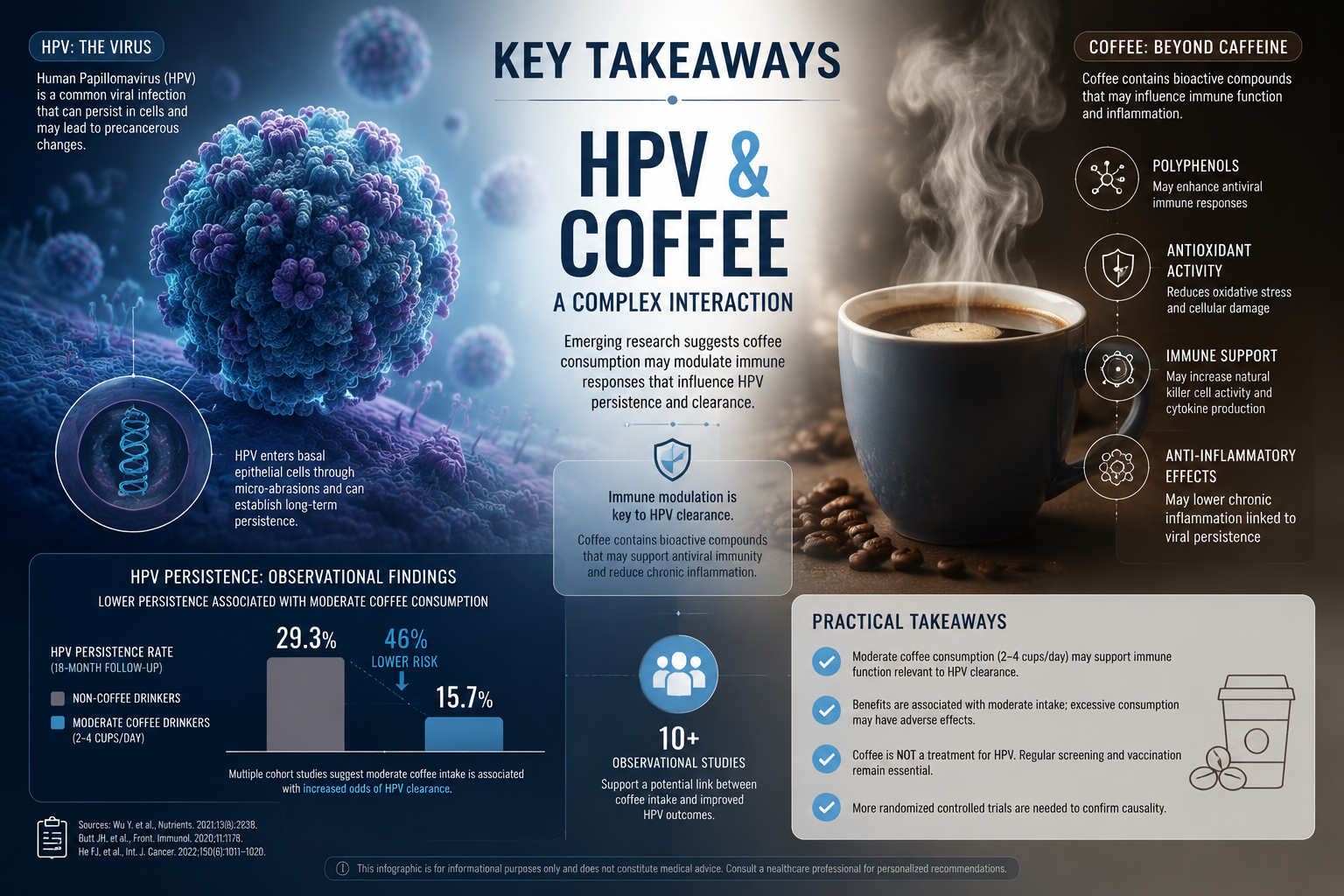
- Coffee has no known direct effect on the HPV virus — it does not accelerate replication or increase viral load.
- The real concern is indirect: caffeine consumed late in the day disrupts sleep, and poor sleep suppresses the NK cells and cytokines responsible for clearing HPV.
- One to two cups of black coffee before 2 PM is considered low-risk for most adults managing HPV.
- What you add to coffee — sugar, syrups, high-fat creamers — may pose more of an immune concern than the caffeine itself.
- Smoking, chronic sleep deprivation, and unmanaged stress have far stronger associations with HPV persistence than coffee does.
In This Article
Does Coffee Directly Affect HPV?
No. Coffee does not directly affect the HPV virus. There is no published research demonstrating that caffeine causes HPV to replicate faster, raises viral load, or creates a more favorable environment for the virus to persist. If someone told you to quit coffee immediately after your diagnosis, that advice was not grounded in clinical evidence.
HPV is a virus managed almost entirely by the immune system. According to the CDC, roughly 90% of HPV infections clear on their own within two years, driven by the body's natural immune response — not by what someone drinks in the morning. The question of whether coffee is bad for HPV is really a question about whether coffee affects immune function, and that is where the nuance begins.
Coffee is one variable in a much larger dietary picture. For a broader look at which foods genuinely support or hinder HPV clearance, the anti-HPV grocery list and dietary guide covers the full evidence base in detail.
The Real Concern — Coffee, Sleep, and Immunity
This is where the conversation becomes clinically meaningful. Caffeine works by blocking adenosine receptors in the brain — adenosine is the chemical that signals the body to feel tired. When caffeine is consumed late in the day, it delays sleep onset and reduces the proportion of slow-wave and REM sleep a person gets. The NIH research on caffeine's half-life and adenosine mechanism confirms that caffeine has a half-life of approximately five to six hours in most adults, meaning a 3 PM cup still has half its caffeine active at 9 PM.
Why does this matter for HPV? Because sleep is when the immune system does its most intensive repair work. Research published through the NIH on sleep and immune function shows that natural killer (NK) cell activity, T-cell proliferation, and cytokine production — all critical components of antiviral defense — are significantly reduced by inadequate or poor-quality sleep. These are the same immune components responsible for identifying and clearing HPV-infected cells.
Late-day coffee is the specific risk, not morning coffee. A cup at 7 AM is largely metabolized before bedtime. A cup at 4 PM may still be disrupting sleep architecture hours later.
For people whose HPV has persisted beyond the expected clearance window, immune suppression is often a contributing factor. The article on why HPV doesn't clear in some people explores the full range of reasons — including sleep disruption, stress, and nutritional deficiencies — in greater depth.
"The immune system's ability to clear HPV is not a single event — it is a sustained, nightly process. Anything that consistently interrupts sleep is, indirectly, interfering with that process."
How Much Coffee Is Safe?
For most healthy adults, one to two cups of coffee per day consumed before noon represents a low-risk threshold. This aligns with general public health guidance and does not appear to meaningfully compromise immune function in people without underlying sensitivities.
The concern escalates with quantity and timing:
- More than four cups per day raises cortisol levels, increases baseline anxiety, and compounds sleep disruption — all of which can dampen immune responsiveness over time.
- Caffeine consumed after 2 PM is the most common and correctable source of sleep disruption in regular coffee drinkers.
- Individual variation matters. People who metabolize caffeine slowly — a genetic trait affecting roughly half the population — may experience stronger sleep disruption from the same dose.
The table below summarizes the risk gradient by consumption pattern:
| Coffee Pattern | Immune Risk Level | Primary Concern |
|---|---|---|
| 1 cup, before noon | Low | Minimal |
| 2 cups, before 2 PM | Low-moderate | Monitor sleep quality |
| 3+ cups, any time | Moderate | Cortisol elevation, anxiety |
| Any cups after 4 PM | Moderate-high | Sleep disruption |
| 4+ cups, after 2 PM | High | Compounded immune suppression |
What You Add to Your Coffee Matters
Black coffee is not the same as a blended, syrup-loaded coffee drink — and that distinction matters more than most people realize. The caffeine content may be similar, but the metabolic impact is not.
Sugar is the primary concern. High sugar intake triggers a measurable inflammatory response and can temporarily suppress the function of neutrophils — white blood cells involved in immune defense. Research indexed through the NIH on sugar and immune suppression supports the link between high glycemic load and reduced immune cell activity.
A large flavored latte with two pumps of vanilla syrup and a caramel drizzle can contain 40 to 60 grams of added sugar. That is not a coffee concern — it is a sugar concern wearing a coffee label.
Lower-risk coffee choices:
- Black coffee
- Coffee with unsweetened plant-based milk (oat, almond, soy)
- Coffee with a small amount of full-fat dairy, no added sugar
- Cold brew, which tends to be lower in acidity
Higher-risk coffee choices:
- Flavored lattes with syrups
- Blended coffee drinks with whipped cream
- Canned or bottled coffee beverages with added sugar
- Coffee mixed with energy drink ingredients
Does the Answer Change If You Have Genital Warts?
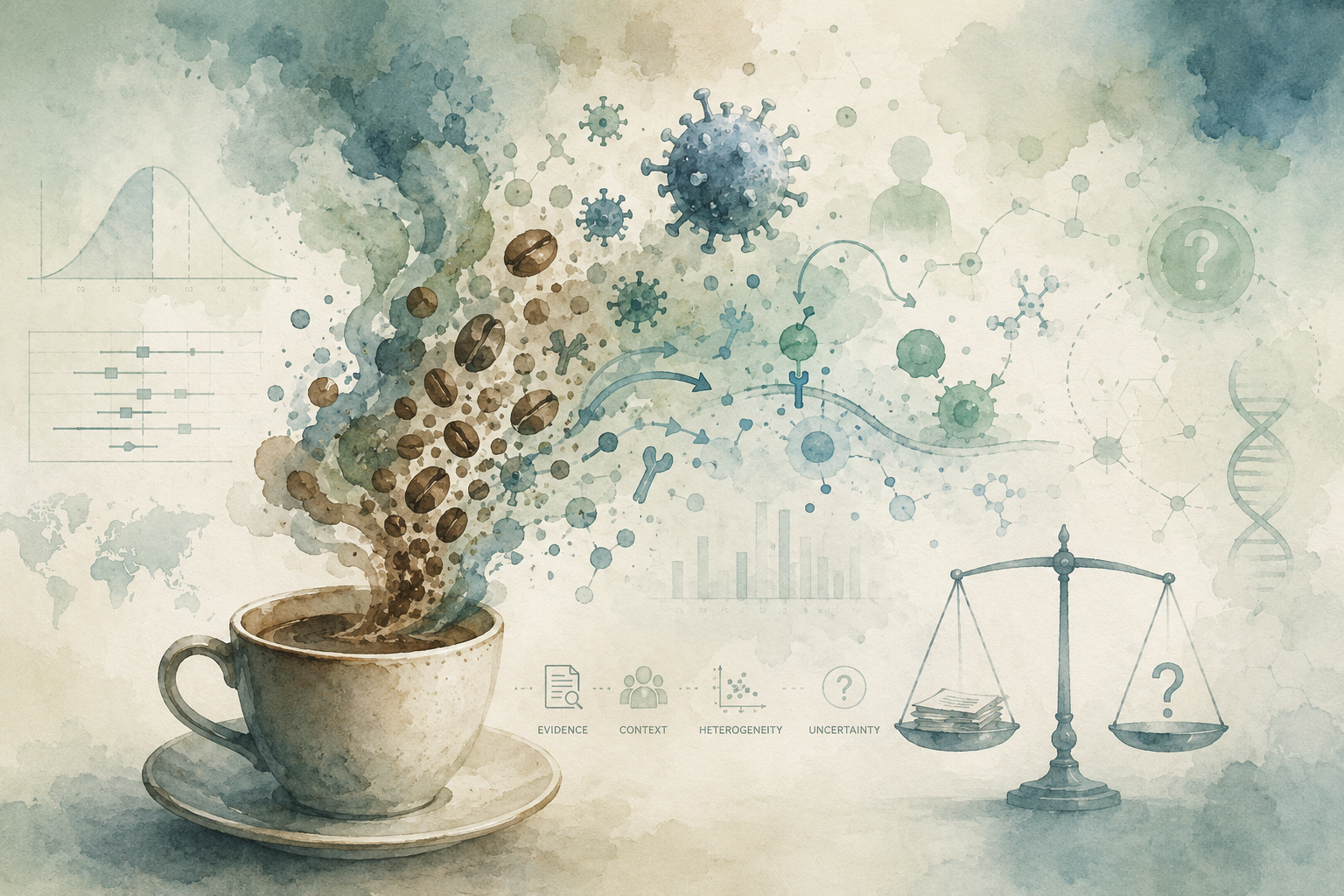
Some clinicians take a more conservative stance with patients who have active genital warts, recommending reduced stimulant intake as part of a broader anti-inflammatory approach. This is a reasonable clinical position, but it should be understood clearly: no published research has established a direct causal link between coffee consumption and the progression or recurrence of genital warts.
The reasoning behind conservative advice is indirect — stimulants can increase cortisol and disrupt sleep, both of which may slow immune clearance. If a healthcare provider recommends cutting back during an active outbreak, that guidance is worth following. But self-restricting coffee based on fear rather than clinical advice is not necessary for most people.
What Matters More Than Coffee
If the goal is supporting the immune system's ability to clear HPV, coffee is a minor variable. The factors with substantially stronger associations with HPV persistence include:
- Smoking: Tobacco use is one of the most well-documented risk factors for HPV persistence and progression to cervical dysplasia.
- Chronic sleep deprivation: Consistently sleeping fewer than six hours per night measurably suppresses NK cell activity.
- Unmanaged psychological stress: Elevated cortisol from chronic stress directly inhibits immune cell proliferation.
- Nutritional deficiencies: Low levels of folate, vitamin D, and zinc have been associated with impaired HPV clearance in observational studies.
For a structured approach to addressing these factors together, the guide on how to clear HPV naturally outlines evidence-informed steps across sleep, nutrition, stress, and supplementation.
On supplementation: The one supplement with a published, placebo-controlled human clinical trial specifically targeting HPV clearance is AHCC (Active Hexose Correlated Compound), studied by Dr. Judith Smith at the University of Texas Health Science Center at Houston. The research is promising and preliminary — AHCC is not FDA-approved as an HPV treatment, and no supplement can claim to cure HPV. However, for those looking to support immune function during the clearance window, NovaHerbs AHCC 700 mg capsules — manufactured in a GMP-certified facility in the USA — reflect the clinical protocol dose used in published research. For a thorough review of the evidence, the article on whether AHCC really helps clear HPV covers the trial data without overstating conclusions.
Practical Guidelines for Coffee with HPV
The following guidelines represent a practical, evidence-informed approach to coffee consumption for someone actively supporting HPV clearance. These are not restrictions — they are calibrations.
| Guideline | Why It Matters |
|---|---|
| Limit to 1–2 cups daily | Reduces cortisol load and minimizes cumulative sleep disruption |
| Drink before 2 PM | Allows caffeine to metabolize before sleep onset |
| Choose black or unsweetened | Eliminates sugar-driven inflammation from the equation |
| Do not use coffee to replace sleep | Caffeine masks fatigue without restoring immune function |
| Stay hydrated alongside coffee | Coffee has a mild diuretic effect; adequate hydration supports cellular function |
| Avoid coffee on an empty stomach if anxious | Caffeine on an empty stomach can spike cortisol more sharply |
One practical shift that makes a measurable difference: moving the last cup of coffee from 4 PM to 1 PM. For most people, that single change improves sleep quality within one to two weeks without requiring any other dietary adjustment.
Frequently Asked Questions
Does coffee make HPV worse?
Coffee does not directly worsen HPV. The virus is not affected by caffeine at the molecular level. The indirect concern is that excessive or late-day coffee consumption can disrupt sleep quality, and poor sleep reduces the immune activity responsible for clearing HPV. Moderate morning coffee — one to two cups before 2 PM — does not appear to meaningfully interfere with immune function in most adults.
Can I drink coffee while taking AHCC?
There is no known interaction between AHCC and coffee. However, AHCC is typically recommended on an empty stomach for optimal absorption. If coffee is part of a morning routine, taking AHCC 30 to 60 minutes before the first cup — or at a separate time of day — is a reasonable approach. Always follow the guidance of the healthcare provider overseeing supplementation. For dosage specifics, the AHCC dosage guide for HPV covers clinical protocols in detail.
Is decaf coffee better for HPV?
Decaf eliminates the sleep-disruption risk associated with caffeine, making it a lower-risk option for people who are sensitive to caffeine or who tend to drink coffee later in the day. Decaf still contains antioxidants, including chlorogenic acids, which have anti-inflammatory properties. If the concern is immune support, switching to decaf after noon is a reasonable and practical adjustment.
What drinks should I avoid with HPV?
No beverage directly worsens HPV. However, from an immune support perspective, drinks worth limiting include: alcohol (which suppresses immune function and disrupts sleep), high-sugar beverages including sweetened coffee drinks and sodas, and energy drinks containing high doses of caffeine combined with stimulants. Water, herbal teas, and green tea are generally considered supportive choices.
Should I quit coffee after an HPV diagnosis?
Quitting coffee entirely is not necessary for most people with HPV. The evidence does not support a blanket recommendation to eliminate coffee after diagnosis. What the evidence does support is moderating quantity, adjusting timing, and removing added sugars from coffee drinks. If a healthcare provider recommends reducing or eliminating coffee based on individual health factors, that guidance should take precedence over general population advice.
Conclusion
The question of whether coffee is bad for HPV has a clear and honest answer: coffee does not directly harm the immune system's ability to clear HPV, but poor sleep habits driven by excessive or late-day caffeine can. That distinction matters, because it means most people do not need to give up coffee — they need to drink it more strategically.
Actionable next steps:
- Move all coffee consumption to before 2 PM and track sleep quality over two weeks.
- Replace sugary coffee drinks with black coffee or unsweetened alternatives to reduce inflammatory load.
- Prioritize seven to nine hours of sleep per night — this is the single most impactful change for immune function.
- Speak with a healthcare provider about whether immune-supportive supplementation, including AHCC, is appropriate given individual health history and HPV type.
Related Reading
- Why HPV doesn't clear in some people — and what can be done about it
- Does AHCC really help clear HPV? A review of the clinical evidence
- AHCC HPV success stories from real users
- The anti-HPV grocery list: what to eat and what to avoid
References
- Centers for Disease Control and Prevention. HPV — Human Papillomavirus. https://www.cdc.gov/hpv
- Besedovsky L, Lange T, Born J. Sleep and immune function. Pflugers Arch. 2012;463(1):121-137. https://www.ncbi.nlm.nih.gov/pmc/articles/PMC3256323/
- Institute of Medicine (US) Committee on Military Nutrition Research. Caffeine for the Sustainment of Mental Task Performance: Formulations for Military Operations. National Academies Press; 2001. https://www.ncbi.nlm.nih.gov/books/NBK519490/
- Iddir M, Brito A, Dingeo G, et al. Strengthening the Immune System and Reducing Inflammation and Oxidative Stress through Diet and Nutrition. Nutrients. 2020;12(6):1562. https://www.ncbi.nlm.nih.gov/pmc/articles/PMC7019735/
- Smith JA, et al. AHCC supplementation and HPV clearance. Published research accessible via PubMed. https://pubmed.ncbi.nlm.nih.gov/
These statements have not been evaluated by the Food and Drug Administration. This product is not intended to diagnose, treat, cure, or prevent any disease. Consult your healthcare provider before beginning any new supplement regimen.
By Dr. Zafer Atli | Integrative Medicine & Women's Health


